
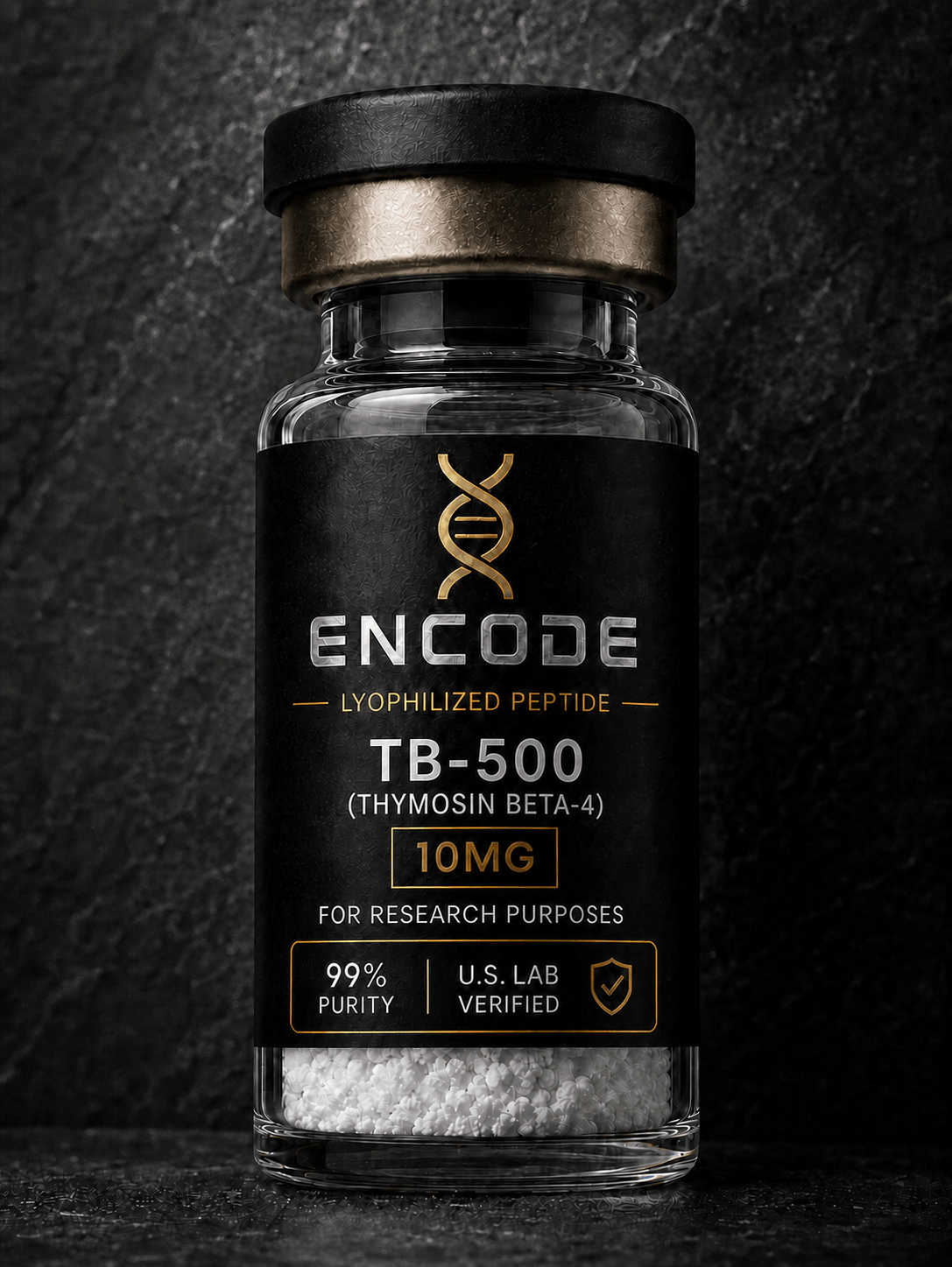
TB-500 (Thymosin Beta-4) 10mg
In stock
A thymosin beta-4 fragment. Labs study it in actin-binding and tissue-repair research.
Rp2.500.000
In stock
Description
TB-500 is not thymosin beta-4. It is a synthetic seven-residue fragment of it, sequence LKKTETQ, corresponding to residues 17 to 23 of the 43-amino-acid parent protein, with an N-terminal acetyl group added for metabolic stability. At roughly one-sixth the mass of thymosin beta-4, it carries the actin-binding domain and little else.
That domain matters because thymosin beta-4 is the most abundant G-actin sequestering protein in mammalian cells. It holds monomeric actin in reserve and releases it for polymerisation, the step that lets a cell change shape and migrate. Research on the LKKTETQ fragment asks how much of the parent protein’s activity survives in the isolated domain.
Published models have measured actin polymerisation, keratinocyte and endothelial cell migration, and blood-vessel formation. Corneal and dermal wound models appear frequently in the literature, as do cardiac studies following the parent protein’s identification in myocardial tissue.
A note on molecular weight: published figures for acetylated LKKTETQ vary between roughly 878 and 890 Da depending on salt form and whether the acetyl group is counted. Check the batch certificate rather than a catalogue figure if the exact mass matters to your calculation.
Supplied as a lyophilised powder at ≥99% purity by HPLC, with batch LC-MS identity confirmation and a certificate of analysis. Reconstitute with bacteriostatic water, store the sealed vial at -20°C, and keep reconstituted solution refrigerated and away from light.
For in-vitro laboratory research only. Not for human or veterinary use.
Research Use & Handling
Shipping & Dispatch
Frequently asked questions
What is TB-500?
TB-500 is a synthetic peptide fragment of Thymosin Beta-4 that contains its actin-binding region. Researchers study it for tissue-repair and cell-migration effects.
Is TB-500 the same as Thymosin Beta-4?
No. TB-500 is a shorter synthetic fragment of the full Thymosin Beta-4 protein. Researchers use it as a more accessible analogue.
Why do researchers pair TB-500 with BPC-157?
Both peptides feature in recovery and tissue-repair research, so researchers often study them together in preclinical models. This reflects a research pattern, not a usage recommendation.
How do I store TB-500?
Reconstitute the lyophilised powder with bacteriostatic water, store it refrigerated at 2–8°C, and use it within about four weeks. Keep unmixed vials cool and out of direct light.
Customer Reviews
Only logged in customers who have purchased this product may leave a review.

Reviews
Clear filtersThere are no reviews yet.